Brown PAC for ETP Plant About
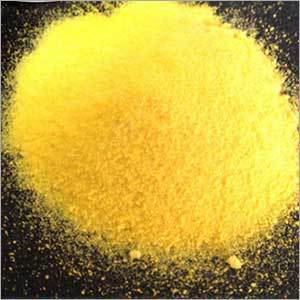
Having rich industrial experience and knowledge, we are instrumental in providing the best grade Brown PAC for ETP Plant. This PAC is tested on different parameters to ensure its effectiveness. The offered PAC is processed under the guidance of our adroit professionals using quality assured chemicals and pioneering methodology. Finding usefulness in industrial processes, the offered Brown PAC for ETP Plant is ideal for treatment of waste water.
Key points:
Brown PAC for ETP Plant
| Poly Aluminium Chloride: |
| Trade Name: | Blu PAC Series |
| Active Ingredient: | Al2O3 based |
| Chemical Name: | Polyaluminium Chloride; Aluminium Polychloride, Aluminium Chlorohydrate |
| CAS No.: | 1327-41-9 |
| Standard: | GB15892-2003 |
| Brand: | Bluwat |
| Certification: | ISO, SGS |
| MOQ: | 5000kgs |
| Port of Loading: | Qingdao Port, China |
| Delivery Time: | Within 10 Working Days After Got Your Payment |
| Package: | Packed in 25kgs double pp bag |
| Applications: | Potable water treatment, wastewater treatment, paper making |
| Sample: | Free to test |
| Specifications: |
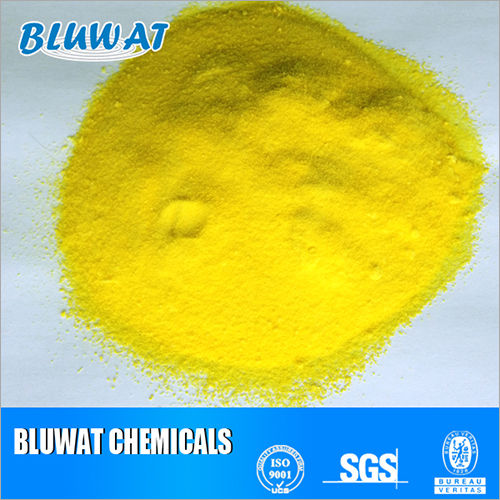
| Appearance: | Brown Powder |
| Al2O3: | 29%Min |
| Basicity: | 70-90% |
| Insoluble: | <1.5% |
| N: | <0.01% |
| As: | <0.0002 |
| Cr6+: | <0.0005 |
| PH: | 3-5% |
Main Properties:
| Advantages |
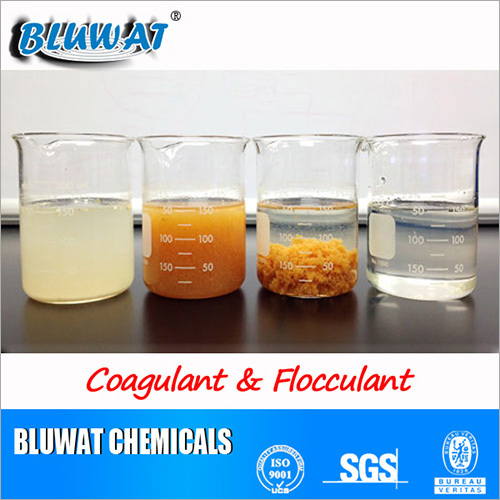
- Its purifying effect on low-temperature, low-turbidity and heavily organic-polluted raw water is much better than other organic flocculant, furthermore, the treatment cost is lowered by 20%-80%.
- It can lead to quick formation of folc (epecially at low temperature) with big size and rapid precipitation service life of cellular filter of sedimentation basin.
- The dosage is smaller than that of other flocculants, which is better for improving the quality of treated water.
- It has widerange adaptability to the waters at different temperatures (in the summer and the winter) and at different regions (in the south and the north of China).
- It is suitable for automatic dosing device of alum.
- It can adapt to a wide range of pH value (59), and can reduce the pH value and basicity after processing.
|
| Application Fields: | - Purifying drinking water, sewage.
- Industrial water purification, industrial wastewater, mining, oil field injection water, metallurgy, coal washing, leather and all kinds of chemical waste water treatment.
- Industrial production: Paper sizing, dye printing, bleaching and dyeing, medicine and other industries.
- In artificial coal industry, it is used for separating coal and water with excellent effect. In the oil refining industry, for oil and water separation.
|
| Application Method: | - The user can allocate remedy concentration by test and determine the optimum dosage according to different to be added after they are dissolved and diluted.
- The dilution ratio of liquid product is 5-50%, and the dilution ratio of solid product is 2-20%.
- The liquid product dosage is 3-40kg/1000 tons water, and solid product dosage is 1-15kg/1000 tons water.
- The amount of specific dosing is based on coagulation tests and experiments.
|
| Package & Storage: | - Powder packed in 25kg P.P woven bags with inner PE bag.
- Storied indoors in a dry, ventilated, cool place, and do not get wet.
- Shelf life: 2 years
|
Superior Coagulation EfficiencyBrown PAC offers remarkable performance in removing suspended solids and reducing chemical oxygen demand (COD) in industrial wastewater. Its fast-settling properties improve sedimentation, resulting in clearer water output. This makes it suitable for challenging effluent streams and enhances the overall efficiency of the treatment process.
Safe and Stable FormulationWith minimal heavy metal content (<0.001%) and being non-poisonous, Brown PAC is safe for use in industrial applications. Its stability under recommended storage conditions ensures a consistent performance throughout its 24-month shelf life. The product remains effective when stored in a cool, dry place away from sunlight and moisture.
Easy Application and Versatile PackagingBrown PAC dissolves readily in water, allowing for flexible dosingtypically between 10 to 50 mg/L depending on effluent characteristics. It is available in convenient HDPE lined bags or drums, with sizes of 25 kg, 50 kg, and bulk options to match varied industrial requirements. This facilitates both ease of handling and safe long-term storage.
FAQs of Brown PAC for ETP Plant:
Q: How is Brown PAC used in effluent treatment plants?
A: Brown PAC is typically dosed between 1050 mg/L into the effluent based on water quality characteristics. It acts as a coagulant, helping aggregate and remove suspended particles and contaminants, thereby clarifying the wastewater prior to discharge or further treatment.
Q: What benefits does Brown PAC offer compared to other coagulants?
A: Brown PAC provides excellent coagulation efficiency, rapid settling of particles, and significant reduction in suspended solids and chemical oxygen demand (COD). It performs effectively over a wide pH range, making it suitable for various industrial effluent types.
Q: When and where should Brown PAC be applied in the treatment process?
A: Brown PAC should be applied during the coagulation stage of effluent or industrial water treatment. It is effective for treating wastewater from diverse industries and is especially useful where efficient solid-liquid separation is required.
Q: What storage conditions ensure the stability and shelf life of Brown PAC?
A: For optimal stability, Brown PAC should be kept in a cool, dry area, protected from direct sunlight and moisture. When stored in unopened HDPE lined bags or drums, it maintains its properties for up to 24 months.
Q: How should Brown PAC be handled during usage and dosing?
A: It is important to use Brown PAC at recommended dosages, dissolving it completely in water before application. Always follow safety protocols and use protective equipment during handling to prevent contact with skin and eyes.
Q: What makes Brown PAC suitable for industrial water purification?
A: Brown PACs high purity (28% Al2O3), low heavy metal content, and non-toxic, odorless quality ensure it meets stringent industrial requirements. Its enhanced coagulation and settling properties make it ideal for purifying and treating complex industrial effluent streams.








 Send Inquiry

 Send Inquiry


