Product Description
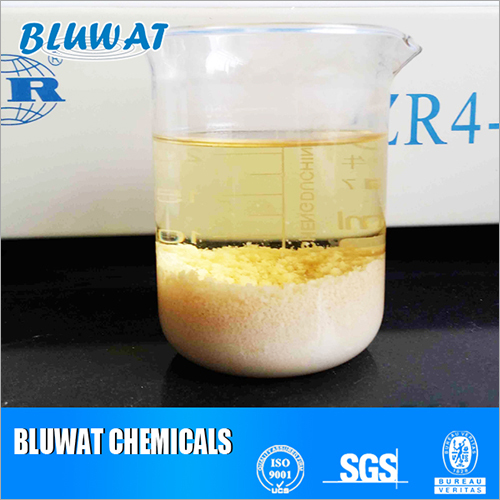
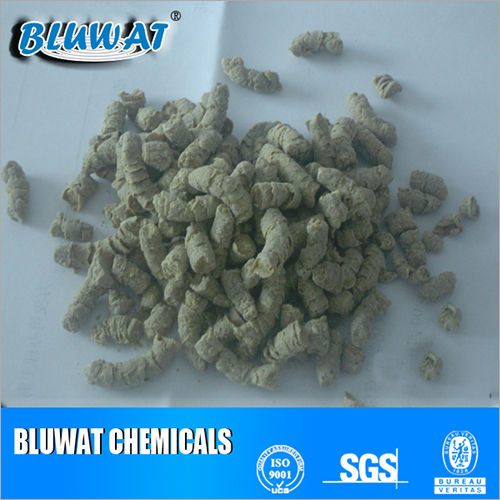
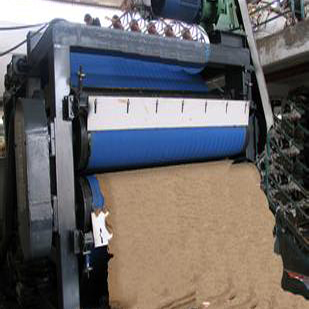
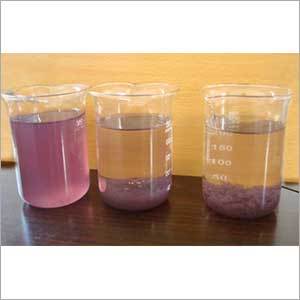
Since our inception in this domain, we have been instrumental in providing high grade Inorganic polymer coagulant (PAC) to our valuable clients. The offered chemical is used for treating waste water in textile, paper and printing industries. This chemical can be bought from us at market leading prices. The provided Inorganic polymer coagulant (PAC) is processed using quality examined chemical under the observation of our dexterous professionals.
Key Points:
-
Safe to use
-
No side effect
-
Effectiveness
-
Known for purity
Inorganic polymer coagulant (PAC)
| Product Name: | Polyaluminium Chloride (Poly Aluminum Chloirde, Polyaluminum Chloride, Poly Aluminium Chloirde, Aluminum Polychride, PAC, Aluminum Plychloride ) |
| CAS#: | 1327-41-9 |
| Appearance: | White and yellow powder |
| Description: | Aluminum Polychloride (30% , Polyaluminium Chloride, PAC) is a new type high efficiency inorganic polymer coagulant, adopting advanced manufacturing technique and quality raw material, show the features of low impurity, high molecula weight, and superior coagulating effect. BLUWAT produces different greades of Polyaluminum Chlorides (PAC) in powder and liquid forms. The highly charged Al in the products is optimized for best performance for the different basicities of PAC. The low to medium basicity products are effective coagulants for treatment of both drinking water and waste water.And the medium to high basicity products are excellent for all ranges of wastewater treatment. |
Polyaluminium Chloride Main Properties:
| Advantages: | - Its dosage lower than aluminum sulfate (based on Al2O3) and water treatment cost is lower than other inorganic flocculants.
- 30% PAC can cause quick formation of flocs, big flocs formation and rapid precipitation. Its treatment capacity is 1.3-3.0 times of other inorganic flocculants.
- PAC enjoys wide-range adaptability for different-temperature source water and a good solubility.
- PAC is slightly corrosive and easy for operation.
- The liquid PAC is suitable for automatic dosing. Furthermore, it will not block pipes over long-time usage.
|
| Application Fields: | - Purifying drinking water, sewage.
- Industrial water purification, industrial wastewater, mining, oil field injection water, metallurgy, coal washing, leather and all kinds of chemical waste water treatment.
- Industrial production: Paper sizing, dye printing, bleaching and dyeing, medicine and other industries.
- In artificial coal industry, it is used for separating coal and water with excellent effect. In the oil refining industry, for oil and water separation.
|
| Specifications: | Items | PAC-01 | PAC-02 | PAC-031 |
| Appearance: | White Powder | Light Yellow Powder | Yellow Powder |
| Produce Process: | Spray dry process |
| Al2O3: | 30 | 30 | 30 |
| Basicity: | 45.0~55.0 | 50.0~85.0 | 50.0~90.0 |
| Insolubles: | 0.5 | 0.5 | 1.0 |
| PH (1%water solution): | 3.5~5.0 | 3.5~5.0 | 3.5~5.0 |
| SO42-: | 0.5 | 0.5 | - |
| N % : | 0.09 | 0.09 | - |
| As % : | 0.0003 | 0.0005 | - |
| Mn % : | 0.005 | 0.045 | - |
| Cr6+ % : | 0.0001 | 0.0015 | - |
| Hg % : | 0.00001 | 0.00002 | - |
| Pb % : | 0.003 | 0.006 | - |
| Cd % : | 0.0006 | 0.0006 | - |
| Fe % : | 0.005 | 0.05 | - |
- PAC-01,White powder, spray dryer type, for drinking water treatment or paper production, raw material is Al(OH3).
- PAC-02,Yellow powder, spray dryer type, for drinking water treatment or waste water treatment, raw material is Al(OH3) .
- PAC-031, Yellow powder, spay dryer type, for drinking water treatment or waster water treatment, raw material is Ca(AlO3)2 and bauxite.
|
| Application Method: | - The user can allocate remedy concentration by test and determine the optimum dosage according to different to be added after they are dissolved and diluted.
- The dilution ratio of liquid product is 5-50%, and the dilution ratio of solid product is 2-20%.
- The liquid product dosage is 3-40kg/1000 tons water, and solid product dosage is 1-15kg/1000 tons water.
- The amount of specific dosing is based on coagulation tests and experiments.
|
Our Services :
We have more than 10 year experience and more than 10 engineers for production research and after-sales service, advanced lab equipments can satisfy your testing requirements.
VIP Service
Dedicated Customer Service Specialist to help guiding clients to use the products.
Customer Care
Regular detailed tracking reports keep customers updated on their application performance, to provide professional suggestions and solutions to help you get more benifits and cut down the cots.
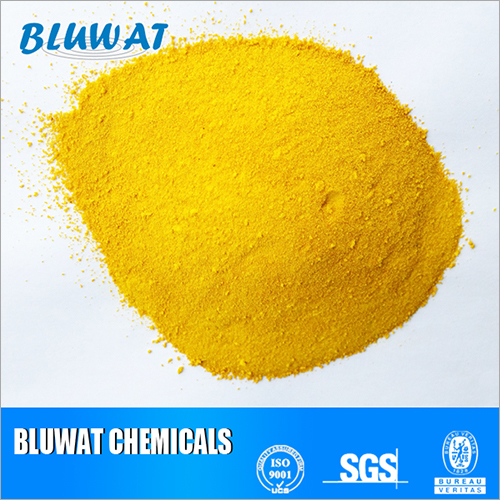
Efficient Water Treatment SolutionPolyaluminium Chloride (PAC) stands out as a powerful coagulant for industrial and municipal water treatment. Its light yellow to yellow powder form is easily soluble in water, ensuring rapid mixing and effective treatment. Suitable for purifying drinking water, treating wastewater, and processing industrial effluents, PAC is praised for its high purity and stable performance across various pH levels and contaminant loads.
Safe, Non-Toxic, and ReliablePAC is formulated to be odorless and non-toxic, making it safe for both operators and treated water. With a melting point of approximately 190C and moisture content of no more than 0.5%, this product guarantees stability during handling and storage. Whether used in large-scale water plants or smaller applications, PACs consistency and reliability support safer and cleaner water solutions.
FAQs of Inorganic polymer coagulant (PAC):
Q: How is Polyaluminium Chloride (PAC) used in water treatment processes?
A: PAC is typically dissolved in water and added to the treatment system, where it works by neutralizing and aggregating suspended particles. This facilitates the removal of impurities through sedimentation and filtration, making the treated water cleaner and safer.
Q: What are the main benefits of using PAC as a coagulant?
A: PAC offers fast coagulation, high efficiency across a wide pH range, and low sludge production. Its high purity and solubility help reduce chemical dosing costs and enhance overall water treatment performance.
Q: When should PAC be applied during the water treatment process?
A: PAC should be introduced during the coagulation stage, usually after preliminary screening and prior to sedimentation and filtration steps. This timing maximizes its ability to remove contaminants and improve water clarity.
Q: Where can PAC be stored for optimal stability?
A: It should be kept in a cool, dry place away from direct moisture and sunlight. Storing PAC in its original 25 kg HDPE bags with an inner liner will help preserve its quality for up to 24 months.
Q: What is the recommended usage or dosage for PAC in industrial applications?
A: Dosage depends on water quality and treatment objectives but generally ranges from 1 to 15 mg/L. Jar tests or pilot-scale trials are advised to determine the most effective dose for specific conditions.
Q: How does the physical and chemical composition of PAC contribute to its effectiveness?
A: With a basicity range of 4090% and Al2O3 content of 2932%, PAC achieves optimal charge neutralization and particle aggregation. Its low insoluble matter and controlled moisture content ensure minimal residue and ease of dissolution.
Q: What industries benefit from using PAC, and why?
A: Industries such as municipal water supply, textiles, paper manufacturing, and chemical processing use PAC for its effective removal of turbidity, color, and heavy metals from water and effluent streams, thereby meeting regulatory and operational standards.