Waste Water Decoloring Agent About
We have gained expertise in manufacturing and exporting Waste Water Decoloring Agent. The offered chemicals are widely used in water treatment plants and paper mills as these are suitable for decoloring and dyeing materials. Reputed vendors of the market supply us with quality ingredients, which are used to formulate pure and quality chemicals. The Waste Water Decoloring Agent is offered at an affordable price and delivered within a given time-frame.
Technical Specifications:
- Solid content: 50%min
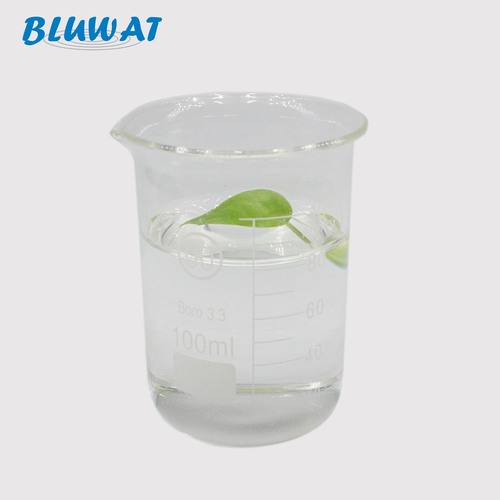
- Light-color, sticky liquid
- Decolouring agent
- For textile, dyeing industries
- Cationic Polymer.
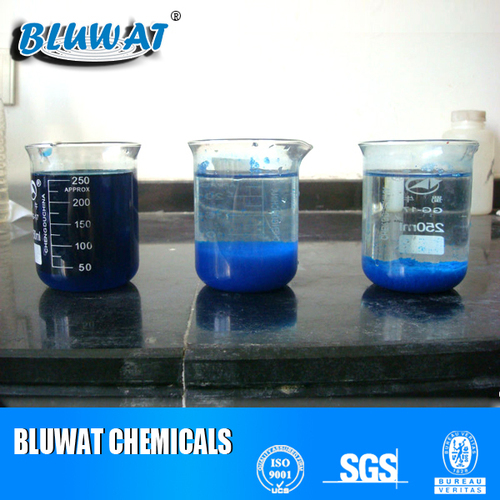
Water Decoloring Agent is used for de-colouring in industrial application.
Water Decoloring Agent's Features:
- Water Decoloring Agent is Quaternary cationic polymer
- Application for Water Decoloring Agent:
- Decoloration, flocculation, COD minimizing.Commonly used for color separation from waste water discharged from dyestuff plants, suitable for treating industrial waste water with assurance of better water quality. Is also used to clean up waste water discharged from textile & printing industries and dye & pigment houses and paper industry.
- Appearance: light-color, sticky liquid
- Viscosity: 50 - 250mPa.s (20C)
- Solid content: >50%
- PH 30% solution: 3 - 5
- Specific gravity: 1.2 - 1.3 (25C)
- Harmless, no-flammable
- Water Decoloring Agent's usage:
- Water Decoloring Agent is widely approved to treat waste water through diluting in small amount of water, and then added directly to waste water. Mixing for a couple of minutes, waste is evaporated out of the water to become clean and clear.Ph value of the waste water must be accommodated close to 7 - 10 for good quality of water.
BWD-01 Water Decoloring Agent Application Fields:
- Water Decoloring Agent is primarily applied for color peeling treatment for waste water with high level of color engendered by dissolved organic matter from dyestuffs plants.
- The agent is apt for treating waste water from removal of color and the other matter
- It is suitable for treating waste water discharged from the textile & paper industries, dye & pigment houses and printing houses.
- It is also used in the manufacturing of paper & pulp as a binding agent.
BWD-01 Water Decoloring Agent Application Methods:
- The agent can be dissolved in water and subsequently added to the waste water directly. Subsequent to mixing for few minutes, it can be precipitated to become clear water.
- The pH value of the waste water must be adapted to 7-10 for better quality.
- When the color level and CODcr are comparatively high, it can be applied with the help of polyaluminum chloride, but should not be mixed together. Thus, the treatment cost goes down. Whether polyaluminum chloride is applied before or after wards depending on the flocculation test and the treatment process.
Packaging & Storing
- It is innocuous, no-incendiary and noncombustible, it can be kept at room or normal temperature, it should not be exposed to the sun.
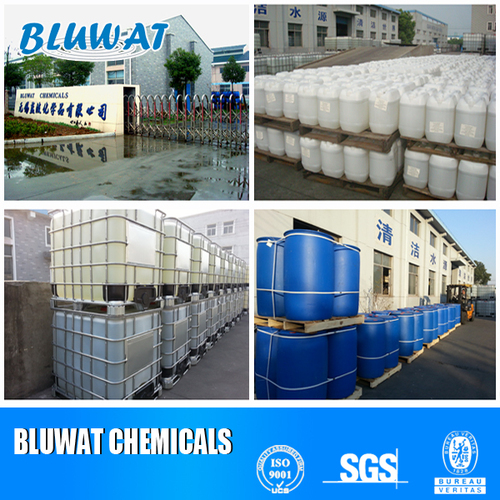
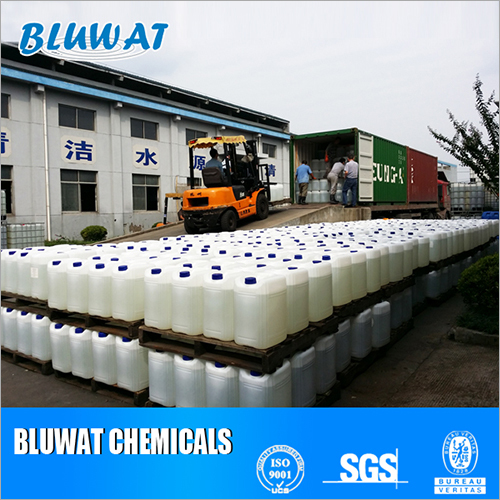
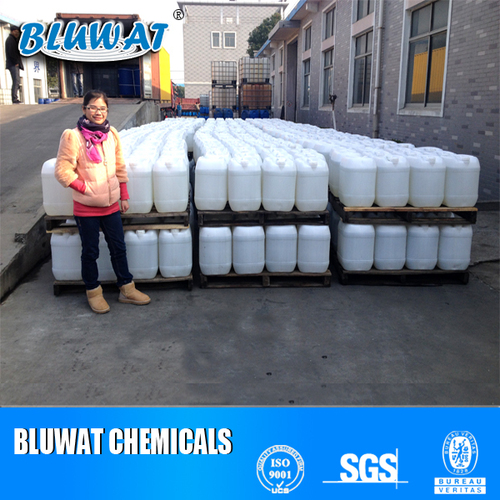
- It is packed in plastic container with each storing 30kg, 250kg and 1250kgs.
- Storage temperature: 10-30. By
Product Details:
| Classification | Chemical Auxiliary Agent |
| CAS No. | 55295-98-2 |
| Other Names | decolor |
| Purity | 50% |
| Place of Origin | Jiangsu, China (Mainland) |
| Type | Other |
| Usage | Paper Chemicals, Textile Auxiliary Agents, Water Treatment Chemicals |
| Brand Name | bluwat |
| Model Number | bwd-01 |
| liquid | lightness |
Superior Decolorization PerformanceDesigned specifically for industries with challenging colored effluents, our decoloring agent addresses both color removal and the reduction of organic content. Its advanced formulation acts rapidly, aiding in the treatment process for textile, paper, dyeing, and printing units where stringent discharge norms are essential.
Efficient and Economical SolutionWith high purity and easy solubility, this liquid agent reduces operational complexities while delivering outstanding treatment efficiency. Suitable for use in various effluent treatment systems, it provides an economical approach to achieving regulatory compliance and environmental sustainability.
Safe Packaging & Reliable SupplyWe package the decoloring agent in durable HDPE drums, ensuring chemical stability during storage and transit. Our robust distribution network across India ensures prompt delivery, making us a trusted partner for bulk and ongoing supply needs.
FAQs of Waste Water Decoloring Agent:
Q: How is the Waste Water Decoloring Agent applied in wastewater treatment processes?
A: The agent is added directly to the wastewater stream in a measured dose, typically after preliminary settling. It is then mixed thoroughly to ensure uniform distribution, facilitating rapid color removal in systems handling effluents from textile, dyeing, paper, and similar industries.
Q: What types of industries benefit most from this decoloring agent?
A: Industries such as textile manufacturing, dye houses, paper mills, and printing sectors benefit significantly, owing to the agents effectiveness in treating highly colored and complex wastewater streams generated during their operational processes.
Q: When should the decoloring agent be introduced during treatment?
A: It is most effective when introduced post-primary treatment, once solid contaminants have been removed. At this stage, the decoloring agent efficiently binds and removes color-causing substances before final filtration or discharge.
Q: Where should the product be stored for optimum stability?
A: The decoloring agent should be stored in HDPE drums within a cool, dry environment, away from direct sunlight and incompatible substances, to maintain its efficacy throughout its 12-month shelf life.
Q: What is the recommended process for dosing and usage in an industrial setup?
A: The dosing amount depends on the intensity of the color and wastewater volume. Generally, it should be dosed following lab-scale trials to determine the best application rate, ensuring maximum decolorization without overdosing.
Q: What are the main benefits of using this agent in industrial effluent treatment?
A: Key benefits include rapid color removal, compliance with environmental discharge standards, reduced chemical consumption due to high efficiency, and easy integration into existing treatment processes.








 Send Inquiry

 Send Inquiry


