Wastewater Color Treatment Cases About
Wastewater Color Treatment Cases
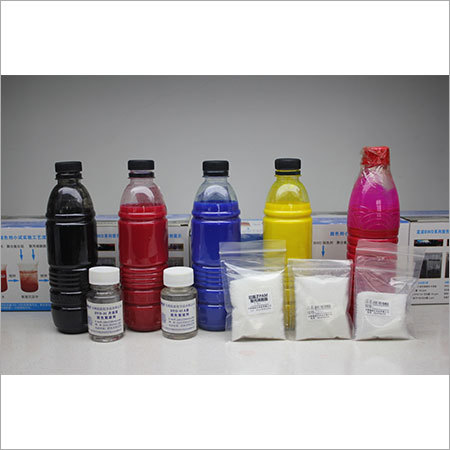
- Case 1 Printing Ink Wastewater
- Technical flow process:
- BWD-01 Water Decoloring Agent + PAC Coagulant + PH adjusted to 7.0-7.5 + PAM Flocculant
Functions for the chemicals:
| Chemical Name | Functions | Dilution Rate | Order No. |
| BWD-01 Water Decoloring Agent | Decolorizing, generating small flocs | 1:50 with clear water | 1st |
| PAC (Polyaluminium chloride) | Coagulation improving, generating big flocs | 5% Al2O3 (17gram PAC in 83gram clear water) | 2nd |
| PAM (Polyacrylamide) | Flocculating, to speed up the sedimentation | 1:1000 with clear water | Last |
| Acid | For PH adjustment when the effluent alkaline | 5% HCL solution | 3rd |
| Alkali | For PH adjustment | 5% NaOH solution | 3rd |
Jar Text Method:
- StepsBWD-01 Water Decoloring Agent + PAC Coagulant + PH adjusted to 7.0-7.5 + PAM Flocculant
- Prepare the solution for each chemical, and the laboratory apparatus and 1-14 pH test strips.
- Dose 200-1000ppm BWD-01 (calculated as raw material), the exact dosage based on the different test, stir it for minutes till the small flocs generating.
- Dose 500-1000ppm PAC (calculated as solid), the exact dosage based on the different test, stir it for minutes till the big flocs generating.
- Test effluent pH, if not in 7-7.5, adjust with Acid or Alkali solution, sometimes, pH around 8-9 is better performance.
- The effluent after pH adjusted, has flocs generated, dose 1ppm PAM (calculated as solid), stir slowly, till the flocs becoming big, and then stay for minutes for sedimentation.
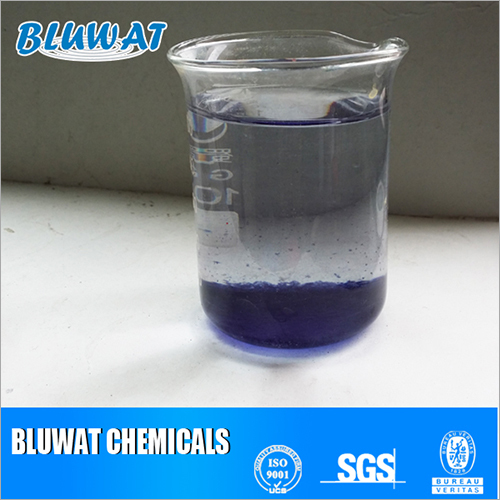
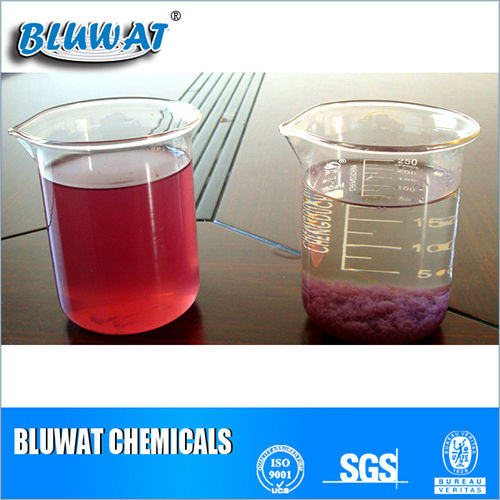
Our cationic decolorizing agent offers exceptional performance for color removal in textile, dyeing, paper, and ink wastewater. Its high purity and industrial grade quality ensure that it meets the demanding requirements of modern wastewater treatment plants. Fully soluble in water, it enables rapid and consistent mixing, providing reliable results across various applications.
Application Versatility Across IndustriesThis color treatment chemical is designed for industrial use and fulfills the diverse needs of the textile, paper, and dyeing sectors. Its effective action in a 6-8 pH range makes it suitable for various wastewater streams, enhancing operational flexibility for manufacturers, processors, and operators seeking consistent color removal.
FAQs of Wastewater Color Treatment Cases:
Q: How should the decolorizing agent be applied in wastewater treatment processes?
A: The decolorizing agent is typically added directly to wastewater during the treatment process when the pH is between 6 and 8. Stirring ensures even dispersion. Dosage may vary based on the degree of coloration and specific process requirements for textile, dyeing, paper, or ink wastewater.
Q: What are the main benefits of using this color treatment chemical?
A: This agent offers high purification efficiency, is easy to dissolve and handle, and provides consistent color removal. Its industrial grade and purity of 98% enable reliable results while reducing the environmental impact of colored effluents.
Q: When is it recommended to use this decolorizing agent in the treatment cycle?
A: It is recommended for use after primary solids separation and before final discharge or secondary treatment. This timing helps to maximize color removal and prepares the wastewater for further treatment or compliant disposal.
Q: Where should the product be stored for optimal shelf life?
A: Store the decolorizing agent in its original plastic drum packaging in a cool, dry area. Proper storage will preserve its efficacy for up to 2 years.
Q: What is the process for dissolving the powder form in water?
A: Simply add the white crystalline powder to water; it will dissolve completely with agitation. Proper mixing ensures maximum contact with colored components in the wastewater, leading to effective treatment.
Q: Is this product suitable for all types of industrial wastewater?
A: The product is specially formulated for textile, dyeing, paper, and ink wastewater. Its performance in other types of industrial effluents may vary and should be verified with a small-scale trial before full-scale use.








 Send Inquiry

 Send Inquiry


